About GERT

Predict how materials fail
before they do

Global Engineering Research and Technologies was established in 2007 by a team of engineers, researchers, and software developers with one shared aim: to put research-grade computational mechanics into the hands of practising engineers. Since then we have delivered consulting and specialised software to the aerospace, electronics, and defense industries.

Founded 2007 · FEA · Peridynamics · coupled methods · machine learning · progressive damage · multiphysics

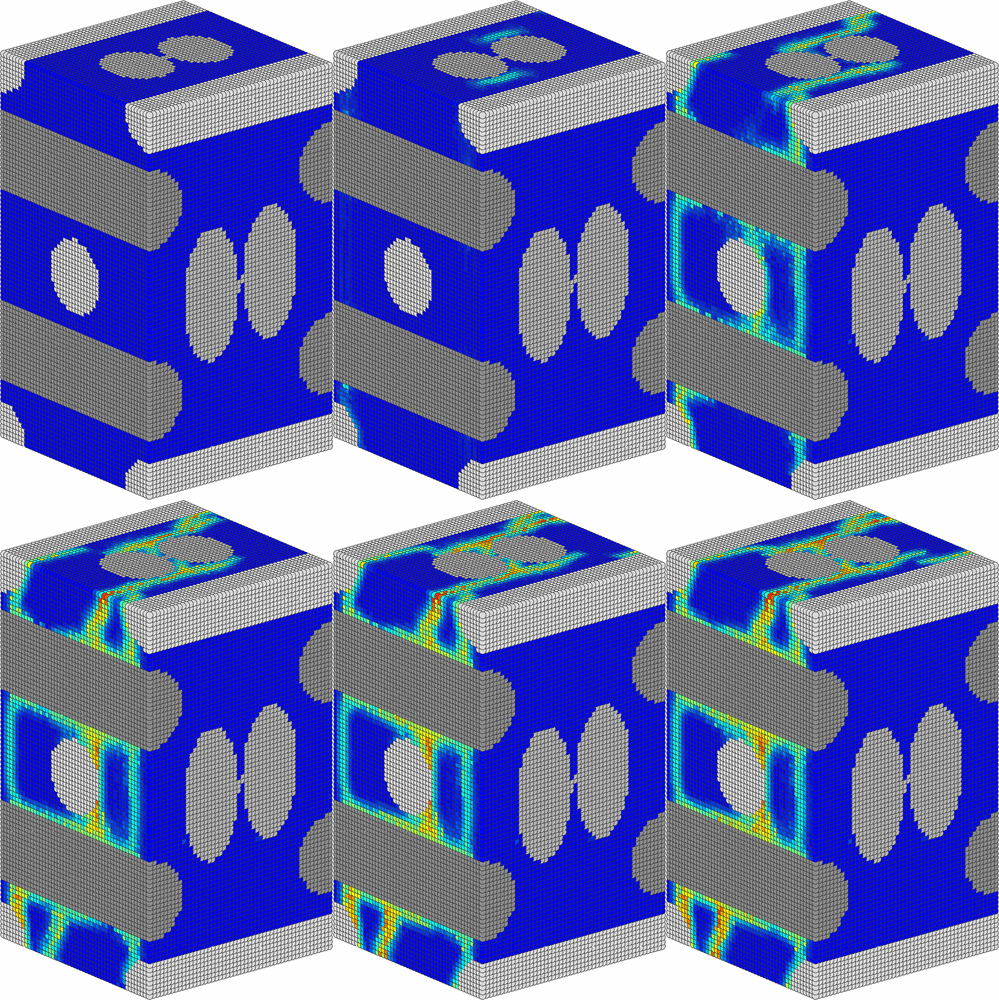
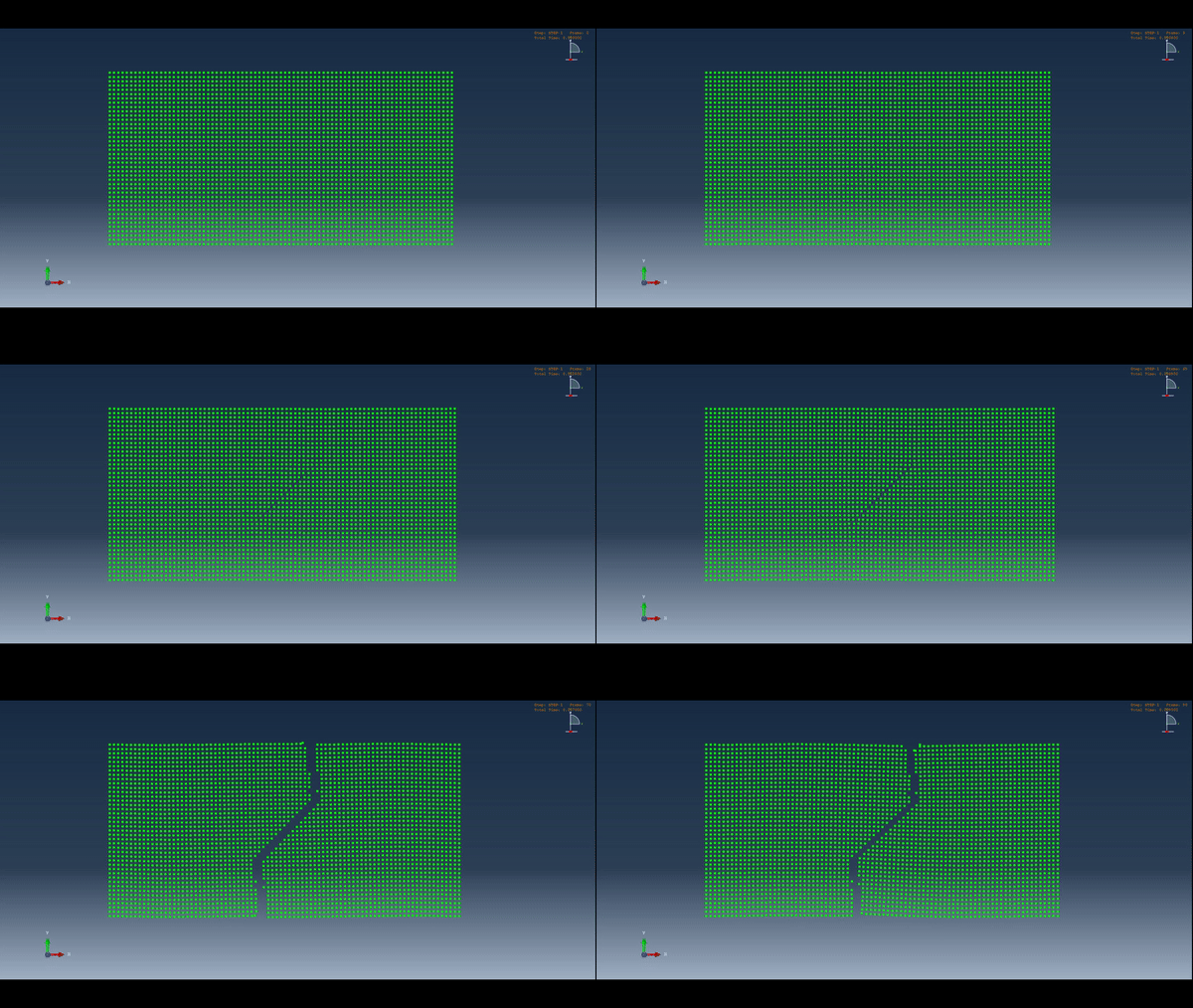
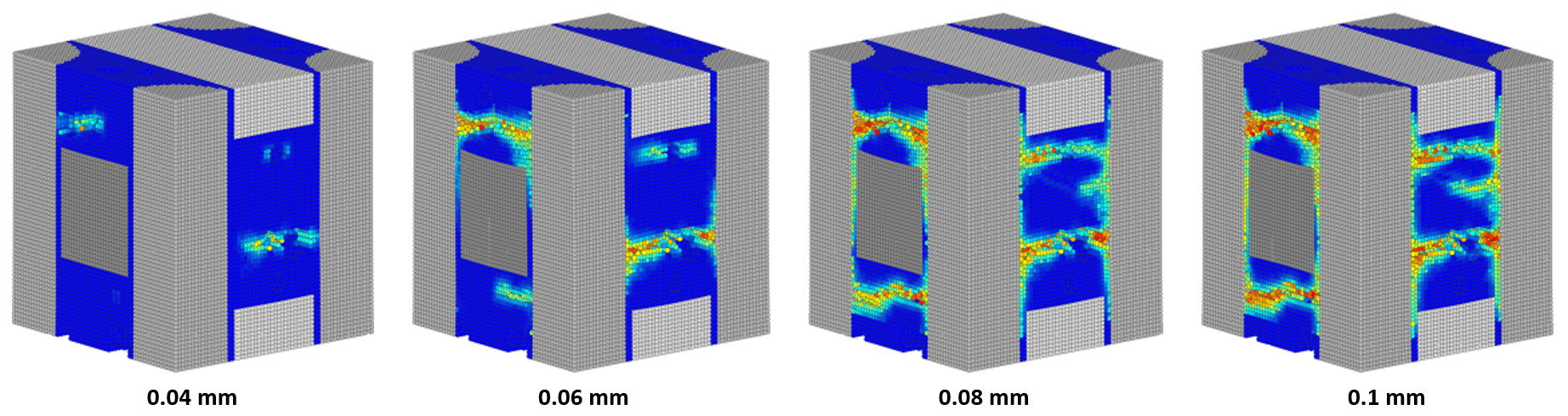
Peridynamic simulation of progressive damage growing through a carbon/carbon composite block
FIG.01 · carbon/carbon composite · damage from zero to failure
§ 01

Our story

Since 2007

Engineering problems that matter rarely fail in ways that classical continuum mechanics predicts well. Cracks nucleate, branch, and coalesce; composite plies delaminate; joints yield around a fastener. GERT was founded to close that gap — to build tools that model damage and discontinuity directly, rather than working around them.

Our team excels at software designed for prediction of material characteristics, failure modes analysis, and sophisticated data manipulation. The foundation is robust computational methodology: Finite Element Analysis for established structural behaviour, and Peridynamics for the cracks and discontinuities that break the continuum assumption. Machine learning sits on top, turning expensive solves into insight that fits inside a design loop.

Today that work reaches engineers as six software tools and a consulting practice spanning mechanical and thermal structural analysis, fatigue life prediction, progressive damage in composites, and multiphysics process modeling.

Founded
2007
engineering research from day one
Software tools
6
from unit cell to bolted joint
Core methods
FEA + PD
coupled, not chosen between
Industries
3
aerospace · defense · electronics
§ 02

Our expertise

What the software does

Three capabilities underpin every tool we ship — each one validated against the physics before it reaches a customer’s design loop.

01 — Material characteristics

Predict behaviour before you build

Advanced computational models forecast how a material responds under load, temperature, and time. Homogenisation of a representative volume element gives effective thermoelastic properties for a micro-structure long before a coupon is cut.

  • Effective stiffness and thermal properties from micro-structure
  • Woven, laminated, and particulate composite architectures
  • Feeds directly into part-scale models
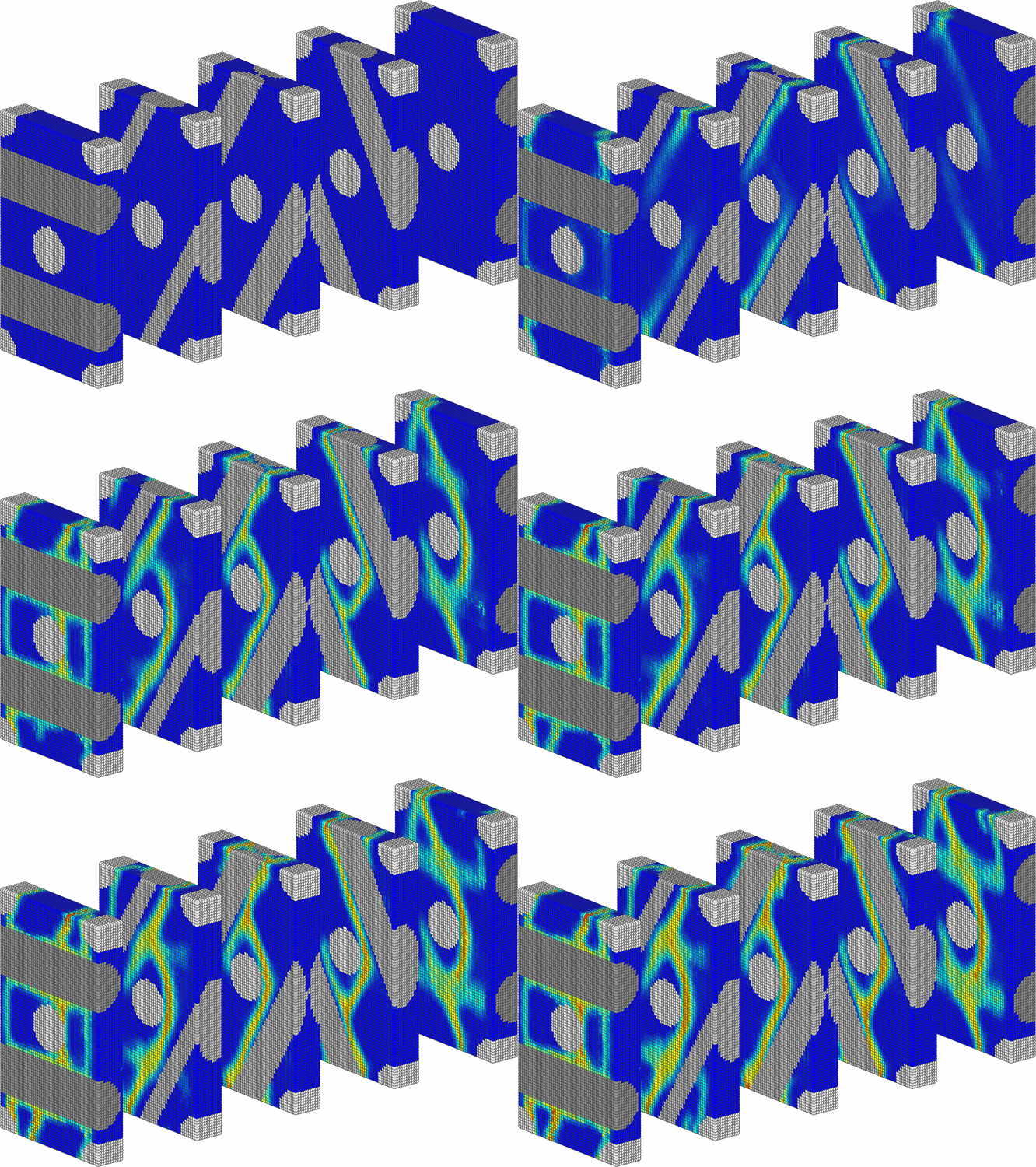
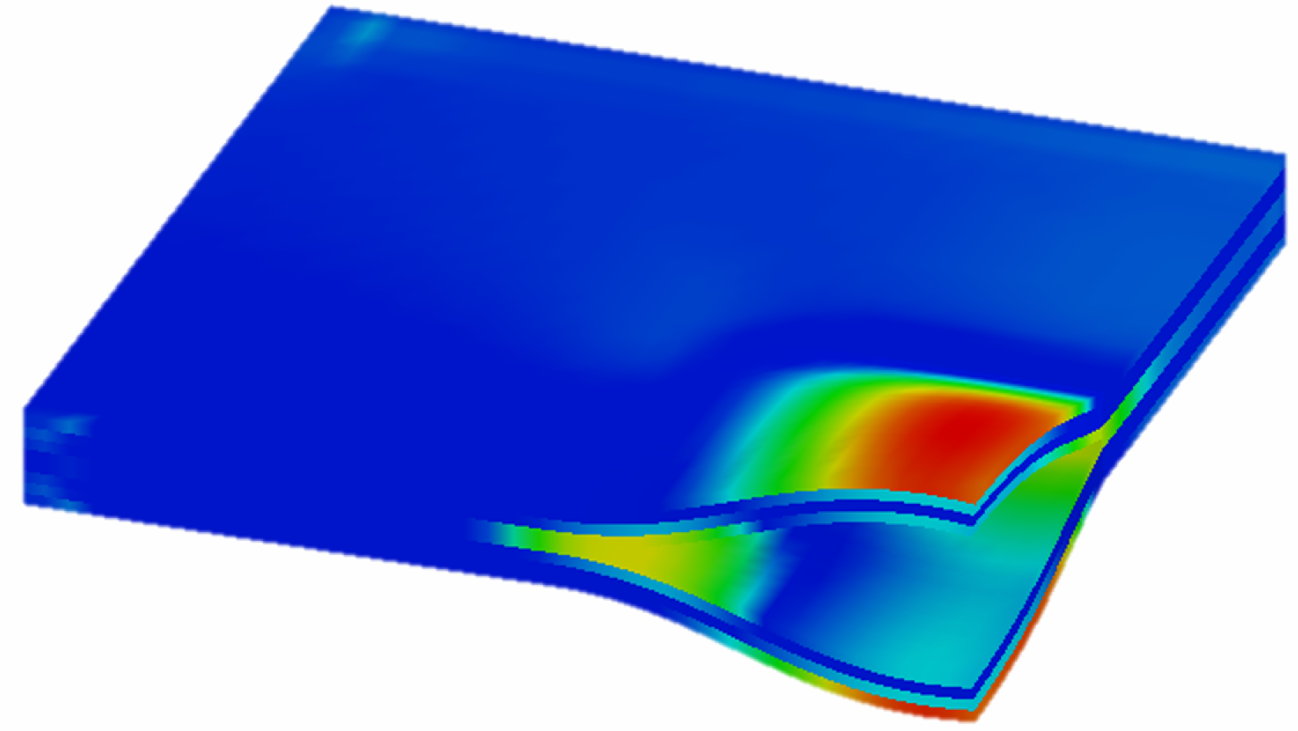
Damage evolving through the plies of a woven composite unit cell
Woven composite unit cell · ply-by-ply damage
02 — Failure modes

Find where it breaks, and why

Identifying potential failure points in structural and electronic materials is where peridynamics earns its place. Cracks are allowed to initiate, turn, branch, and arrest on their own — no pre-defined crack path, no remeshing, no criterion bolted on after the fact.

  • Autonomous crack nucleation and branching
  • Delamination and matrix cracking in composites
  • Progressive damage right through to final failure
Peridynamic simulation of progressive damage in a composite representative volume element
Composite RVE · progressive damage to failure
03 — Data & machine learning

Turn full fields into decisions

Machine learning algorithms process and analyse the complex datasets simulation and experiment produce, providing actionable insight rather than another contour plot. Digital image correlation closes the loop, measuring full-field displacement and strain from photographs of the real article.

  • Full-field displacement and strain from digital images
  • Automatic crack detection and tracking
  • Simulation validated directly against test data
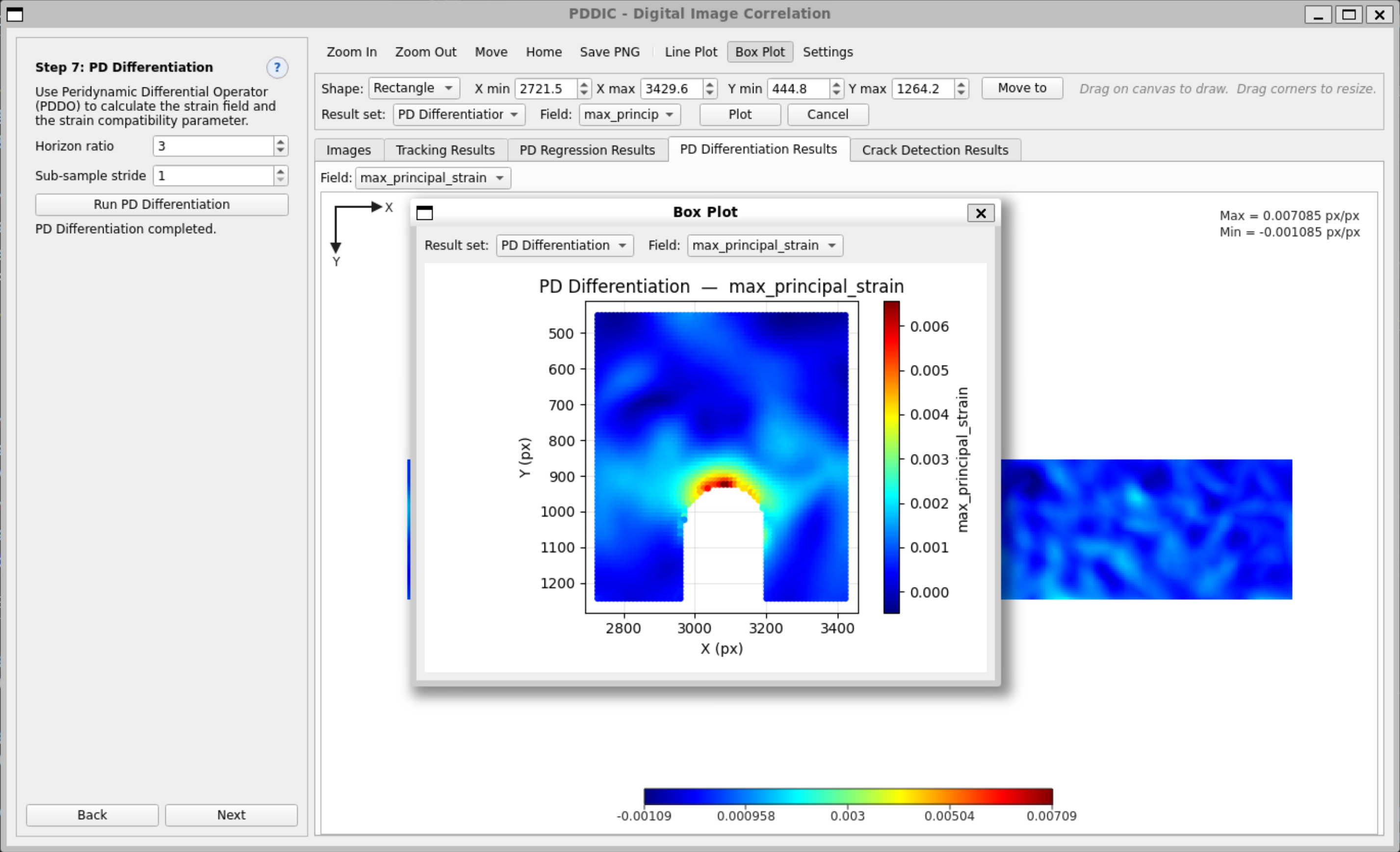
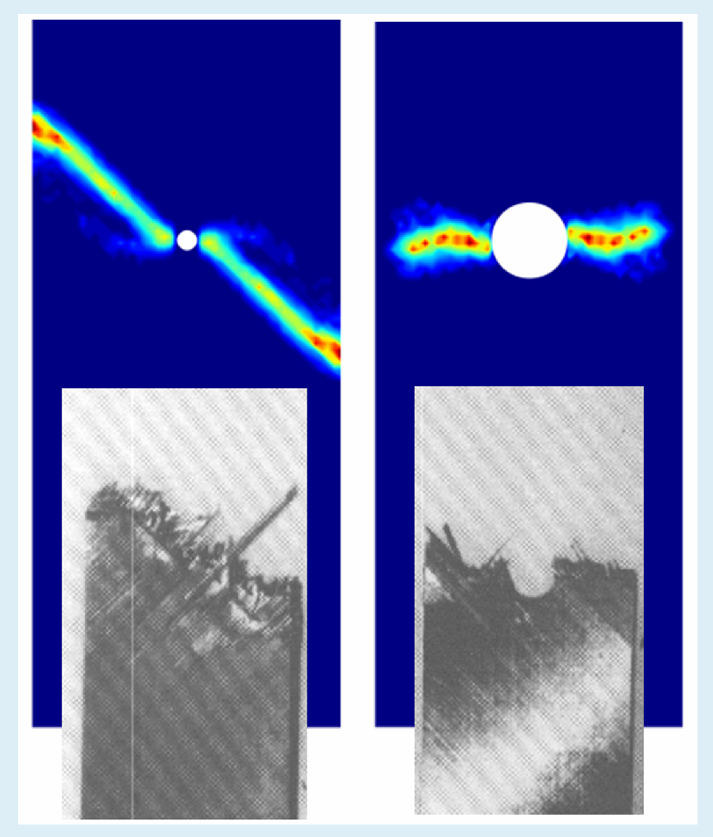
Peridynamic digital image correlation software showing a measured strain field
PD-DIC · measured strain field from test images
§ 03

Two methods, one toolbox

FEA & Peridynamics

The foundation of our software lies in robust computational methodology. We do not ask engineers to pick a side — each method is used where its assumptions actually hold.

A peridynamic region embedded inside a finite element mesh
Method A

Finite Element Analysis

A well-established method for simulating physical phenomena, enabling precise modelling of structural behaviour. Fast, mature, and unmatched for the vast majority of a structure where the continuum assumption holds perfectly well.

continuum · mature · efficient
An inclined crack propagating through a peridynamic model
Method B

Peridynamics

An emerging and powerful theory that addresses limitations in traditional continuum mechanics, particularly useful for modelling cracks and discontinuities. Its integral formulation stays valid exactly where the classical partial differential equations break down — at a crack tip.

non-local · discontinuity-native · mesh-free
§ 04

Coupled FEA – Peridynamics

Our innovation

To get the benefit of both, GERT pioneered a coupling approach that embeds a peridynamic region exactly where damage is expected and leaves finite elements to carry the rest of the structure — inside the platforms engineers already use, Ansys and Abaqus.

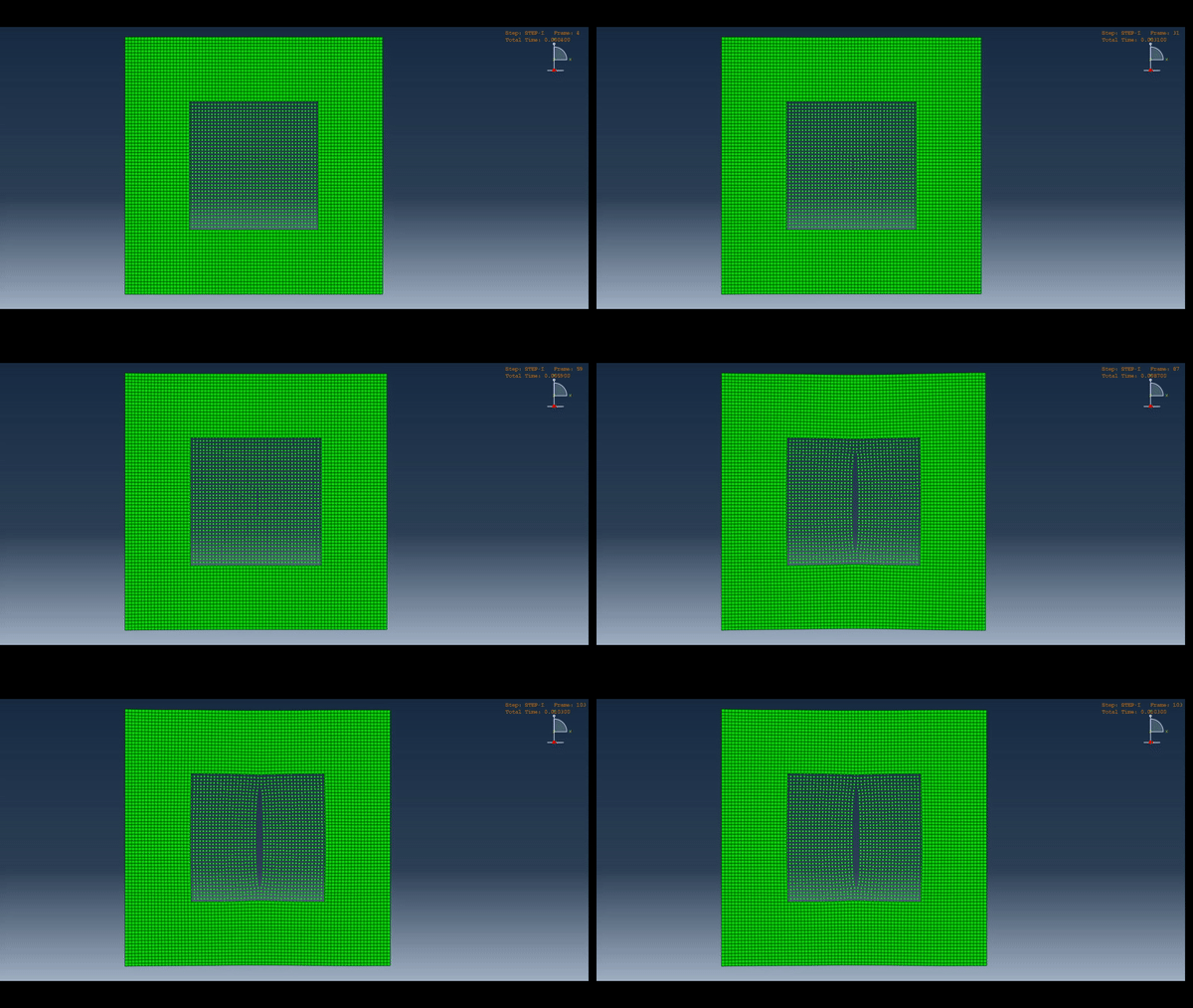
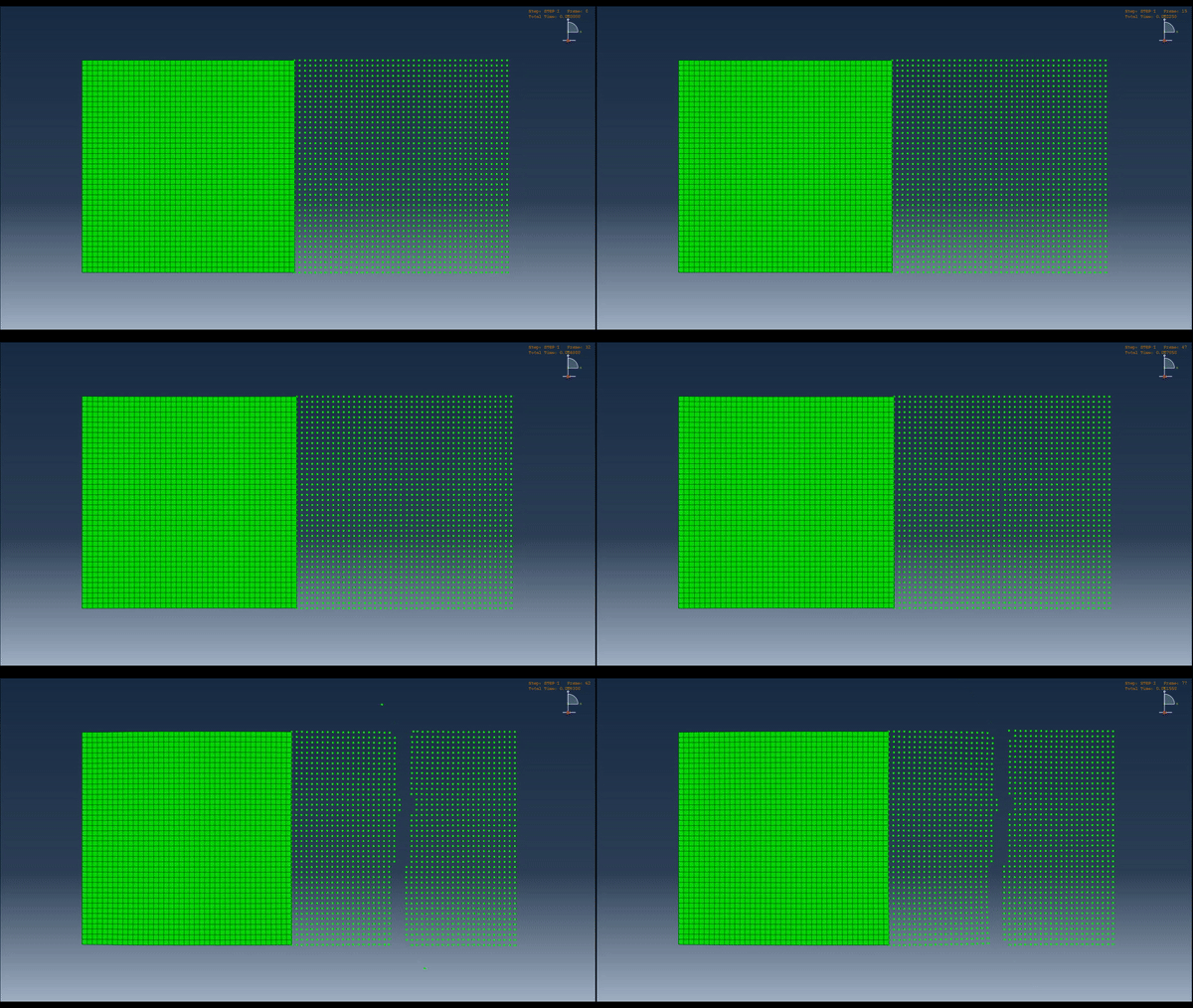
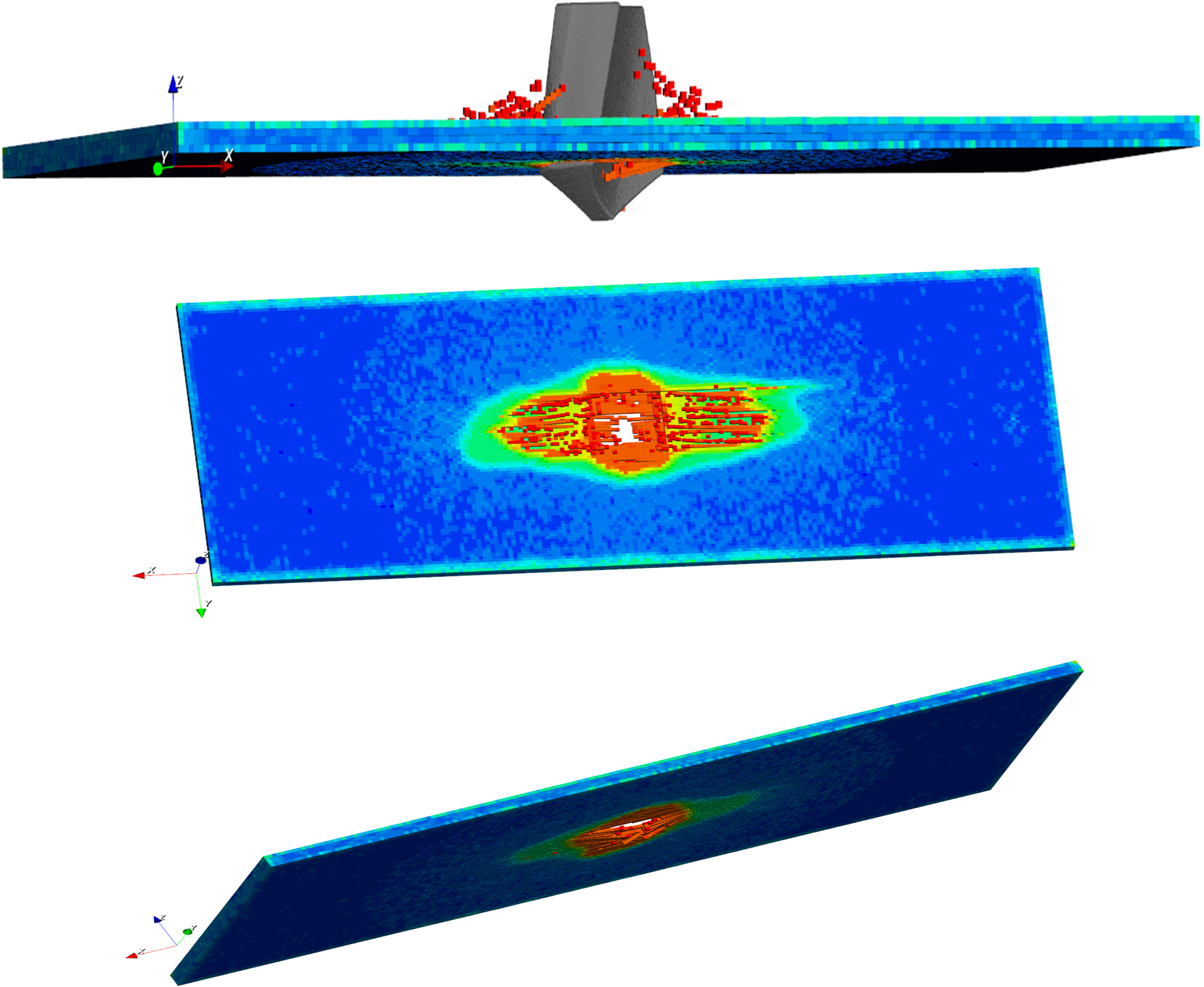
Direct coupling between a finite element region and an ordinary state-based peridynamic region
FIG.02 · direct FE – OSB-PD coupling peridynamic subdomain · finite element remainder

Accuracy where it counts

Peridynamics resolves the crack; FEA carries the far field. Neither method is stretched past its assumptions.

Cost that stays sane

The expensive non-local formulation is confined to the subdomain that needs it, not the whole model.

Inside your existing tools

Delivered as integrations for Ansys and Abaqus, so the method reaches an existing workflow instead of replacing it.

§ 05

What we do

Simulation consulting

We specialise in simulation consulting, using both FEA and Peridynamics to deliver analysis services that blend deep theoretical knowledge with extensive practical experience.

Mechanical and Thermal Structural Analysis

Mechanical and Thermal Structural Analysis

By utilizing our expertise in both mechanical and thermal structural analysis, we offer essential guidance that enhances the design of safer, more efficient, and cost-effective structures across diverse industries, including aerospace, automotive, construction, and manufacturing.

We utilize advanced modeling tools to deliver precise predictions of structural behavior. Additionally, we develop tailored solution methods to ensure that our recommendations precisely align with the specific requirements and challenges of each project.

Fatigue Life Prediction

Fatigue Life Prediction

Our fatigue life prediction consulting service focuses on assessing the longevity of materials and structures subjected to cyclic loading, an essential factor in industries where safety and structural integrity are crucial, such as aerospace, automotive, construction, and manufacturing.

We utilize advanced analytical techniques and robust fatigue models to accurately determine potential points and times of fatigue failure within components. By leveraging state-of-the-art simulation software, we model real-world conditions to predict how they impact fatigue life, aiding in the early identification of likely failure points.

Progressive Damage in Composites

Progressive Damage in Composites

Our consulting service specializes in progressive damage analysis of composite materials, providing essential insights for sectors utilizing advanced materials like aerospace, automotive, and renewable energy. Known for their robust yet lightweight characteristics, composites may undergo complex damage behaviors such as matrix cracking, delamination, and fiber breakage under operational stresses.

We employ advanced computational models to meticulously simulate and analyze the damage progression within composite structures. These models enable us to accurately forecast the initiation and development of damage across various loading scenarios, enhancing the reliability and performance of composite applications.

Multiphysics for Process Modeling

Multiphysics for Process Modeling

Our consulting service in multiphysics process modeling delivers tailored solutions for industries involved in complex operations where multiple physical processes interact, such as in corrosion and electroplating.

These services are designed to address the unique challenges of industries that require a deep understanding of how different physical phenomena interrelate within their operational frameworks.

§ 06

Mission & vision

Where we are going
Our mission

Push the boundary of what can be simulated

To develop advanced software that harnesses both traditional computational methods and cutting-edge machine learning, addressing a wide array of engineering challenges and enabling our clients to achieve breakthroughs in their own fields.

accuracy · efficiency · usability
Our vision

A global leader in engineering research

To continue our tradition of innovation and excellence — expanding our expertise, developing new technologies, and shaping the future of the aerospace, electronics, and defense industries through exceptional service.

research · software · service
Send an Email info@gertechnologies.com
Leave a Message Use online form

Have a simulation problem that standard tools can’t solve?

Tell us about your material, geometry, or failure mode — we’ll tell you which of our tools fits, or build the method you need.